Some questions don’t knock politely.
They linger. They sit on the edge of your mind while you’re doing something else, washing dishes, scrolling at 2:13 a.m., watching a needle disappear into cloth and reappear again, again, again.
I’ve started to believe that progress, real progress, doesn’t come from answers at all. It comes from questions that refuse to leave you alone. Questions that make you uncomfortable in small ways at first. Then bigger ways. Then you realise, a little too late maybe, that everything you thought was “simple” actually wasn’t.
Embroidery. Stitching. Two words that sound almost interchangeable, until they aren’t. Across cultures, across centuries, across households where grandmothers stitched by dim light while cities outside modernised too fast. We talk about these practices like they’re techniques. Skills. Hobbies. Decorative extras.
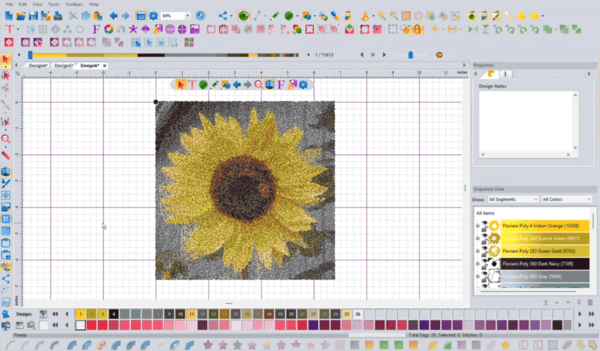
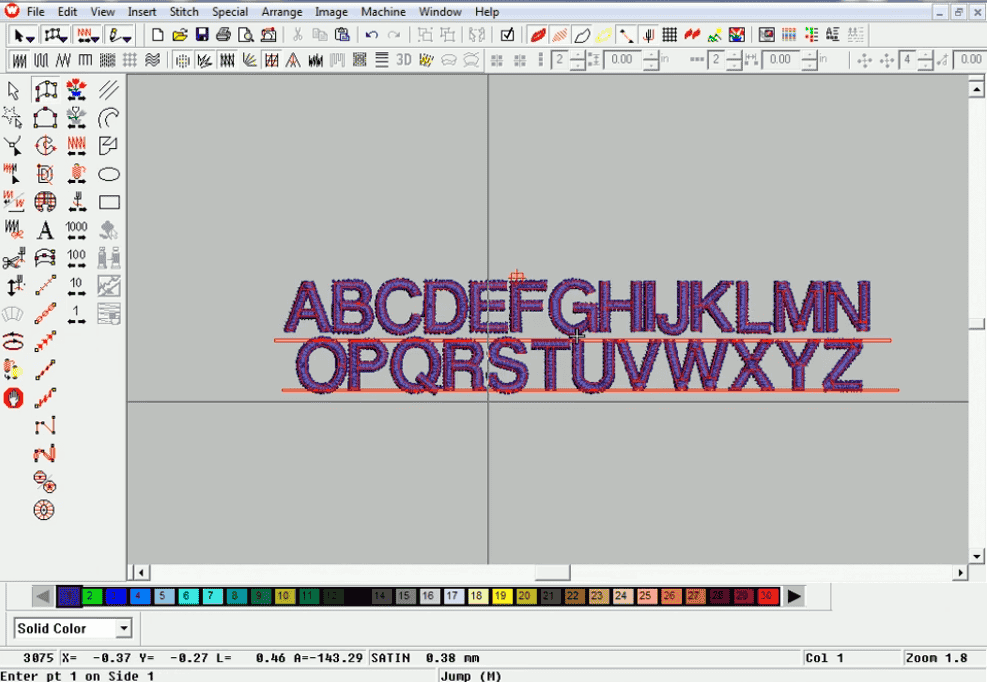
Today, of course, the conversation has expanded, screens, software, files sent across continents through online embroidery digitising, designs translated from hand-drawn memory into machine-readable language. Progress, again. But the question still lingers.
But what if that’s already the wrong starting point?
What if the success of embroidery versus stitching, culturally, emotionally, historically, depends on a single, nagging question we don’t like asking?
What are we really preserving here?
Need a Professional Embroidery File?
If you want clean, production-ready embroidery files, Embpunch provides professional embroidery digitizing services for logos, caps, patches, jackets, polos, and more.
Are We Decorating Fabric, or Storing Memory Without Knowing It?
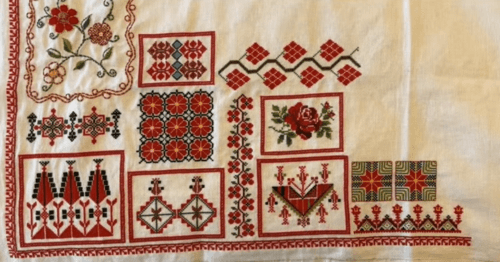
This question hits harder than it sounds. And it matters more than most people admit.
Because once you start seeing embroidery as memory, you can’t unsee it.
In parts of South Asia, embroidery patterns still quietly announce where someone comes from, even if the wearer doesn’t consciously know it anymore. A floral motif that traces back to ancient times. A geometric rhythm that whispers Baloch heritage. In Palestine, tatreez isn’t just beautiful, it’s defiant. Political. A refusal to disappear.
Now contrast that with how modern embroidery digitizing services operate, converting those same patterns into scalable files, optimised for machines, speed, and global delivery. Necessary, yes. Powerful, even. But it raises an uncomfortable thought: when memory becomes a file format, what parts survive the conversion?
Stitching, on the other hand (or maybe on the same hand?), feels quieter. More functional. A hem repaired. A tear closed. But those repairs? They tell stories too. Wartime Europe, patched coats. Japanese boro, layers upon layers of survival stitched into indigo cloth. Poverty turned into philosophy, later turned into global fashion trends, ironically sold at prices the original wearers could never afford.
This question challenges the lazy assumption that embroidery is expressive and stitching is mundane. No. Both are memory devices. Just written in different dialects, one now increasingly mediated by software and screens.
Answer it honestly and suddenly success isn’t about aesthetics. It’s about remembrance. About what survives when people don’t.
Who Decided This Was Art, and That Was Just “Women’s Work”?
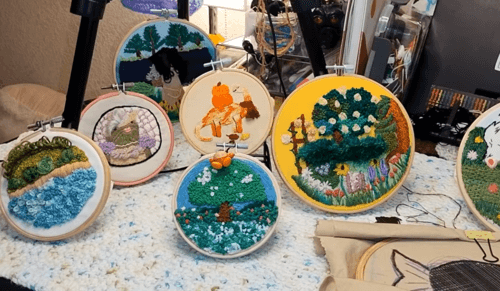
This one always feels sharp. A little unfair. Necessary.
Somewhere along the line, embroidery became something we framed, while stitching became something we expected. One has museums. The other got ignored. And yes, gender has everything to do with that; let’s not pretend otherwise.
For centuries, women stitched because they had to. Clothes needed mending. Families needed warmth. There was no applause for precision. No credit for mastery. Meanwhile, the same techniques, when displayed on royal garments or church tapestries, were suddenly elevated to “high art.”
Even today, when professional embroidery digitizing services present polished, flawless outputs, the original labour, the hands, the hours, the domestic histories, often disappears behind the final product.
I remember seeing an exhibition a few years ago (post-pandemic, when museums started reopening, quietly, cautiously). An embroidered robe was described as “masterfully detailed.” I thought of my aunt, who stitches cleaner seams than any machine I know, and no one’s ever called her an artist out loud.
This question forces us to confront power. Who gets to define value? Who writes the labels?
Answering it honestly reframes success entirely. Cultural success isn’t institutional approval. It’s recognition without permission. It’s naming what was always there.
Are We Stitching Faster, or Are We Stitching Hollow?
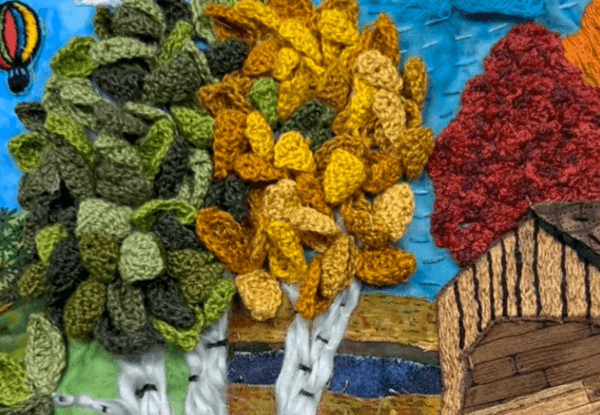
This question doesn’t have a neat answer. It wobbles.
Machines can now do in minutes what once took weeks. Digitised embroidery files circulate globally. Algorithms generate patterns. Even tradition is downloadable now, through platforms offering online embroidery digitizing to anyone with a design and a deadline. Efficient. Clean. Reproducible.
And yet, something feels thinner.
Hand embroidery has weight. Not physical weight, exactly, but presence. You can feel when someone spent time with fabric. The tiny inconsistencies. The pauses. The moments where the hand hesitated (maybe to think, maybe because life interrupted).
In many cultures, stitching circles weren’t about output. They were a social infrastructure. Storytelling hubs. Therapy sessions before therapy had a name. Today, speed is success. Scale is success. Quantity wins.
But does it?
This question challenges the worship of efficiency. Sometimes faster isn’t progress. Sometimes it’s erosion with good branding.
Answer it honestly and you begin choosing intention over optimisation. Meaning over metrics. Not always, but consciously.
What Does a Stitch Reveal About Who We Think We Are?
This one sneaks up on you.
Because stitches are not neutral. They never were.
In some African cultures, stitch density communicates age or status. In Central Asia, embroidery once signalled marital readiness. Even restraint, minimal stitching, functional seams, reflects cultural attitudes toward modesty, visibility, restraint.
When these identities are translated through modern embroidery digitizing services, the responsibility becomes heavier. Accuracy matters. Context matters. A misplaced detail isn’t just a design error, it can be cultural distortion.
Identity leaks through technique whether we want it to or not.
Today, global fashion borrows freely. Motifs travel faster than context. A pattern becomes a “trend.” A heritage becomes a hashtag. Sometimes appreciation. Sometimes extraction. The line is blurry and people argue about it constantly online (especially recently, if you’ve seen the debates around cultural ownership in fashion weeks).
This question matters because it asks for responsibility, not guilt.
Answer it honestly and you start seeing stitches as statements. Choices. Alignments. Cultural success becomes representation without distortion.
Are We Protecting Tradition, or Suffocating It?
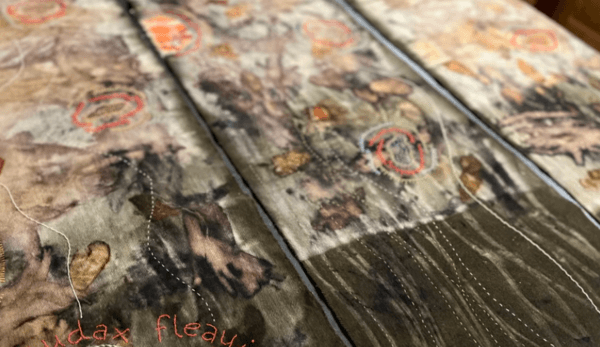
This is where things get messy. Emotional.
Tradition is often treated like glass. Don’t touch. Don’t alter. Preserve exactly. But living cultures don’t behave like museum exhibits. They move. They adapt. They absorb.
I once spoke to a young designer who felt torn, guilty even, for modernising traditional embroidery motifs before sending them for online embroidery digitizing. Her grandmother laughed. Actually laughed. Said something like, “If it doesn’t change, it’s already dead.”
That stuck.
This question challenges purity myths. The idea that evolution equals disrespect. Sometimes continuity requires mutation.
Answer it honestly and tradition breathes again. Success becomes survival, not stagnation.
The Question Beneath All Questions (The One We Avoid)
Strip everything back, and you’re left with this:
Why are we stitching at all?
To decorate? To repair? To remember? To resist? To belong?
Embroidery versus stitching isn’t a competition. It’s a mirror. It reflects how cultures treat labour, gender, memory, speed, and identity, even now, when stitches travel digitally through embroidery digitizing services instead of hands alone.
And maybe that’s the uncomfortable truth. That the stitch always knew more than we did.