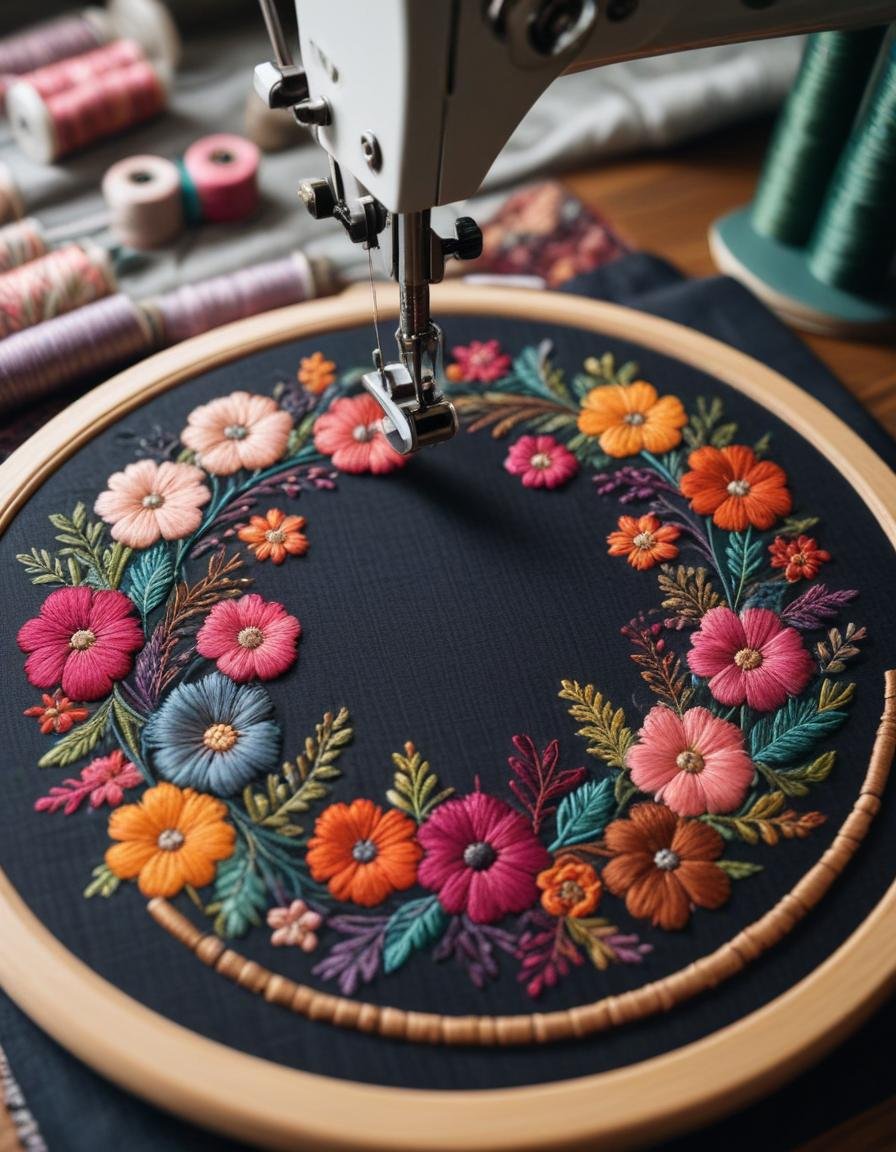
When you consider embroidery and stitching, it might seem like they’re interchangeable terms, but they actually represent distinct techniques with different purposes. You’ll find that embroidery is all about embellishing fabric with intricate designs, while stitching typically focuses on joining pieces of fabric together. As you explore these techniques, you’ll uncover not only their unique applications but also the skills required for each. What’s more, the choice between them can significantly impact the outcome of your project, leading you to wonder which one suits your needs best.
Key Takeaways
- Embroidery is the art of decorating fabric with intricate designs, while stitching is primarily for joining fabrics to create seams and hems.
- Embroidery utilizes various stitches like satin and chain to enhance aesthetics, whereas stitching employs basic techniques like straight and zigzag stitches for functionality.
- Embroidery requires a higher skill level and more time due to its complexity, while basic stitching is more accessible for beginners.
- Aesthetic differences exist, with embroidery offering vibrant textures and designs, while stitching results in a flatter, more subtle appearance.
- Project goals and material compatibility play crucial roles in choosing between embroidery for detailed designs and stitching for structural integrity.
Definition of Embroidery
Embroidery is the art of decorating fabric with needle and thread, where intricate designs and patterns are skillfully stitched to enhance both aesthetic appeal and texture. This craft has been practiced for centuries, evolving through various cultures and styles. When you engage in embroidery, you’re not just adding beauty; you’re also creating a tactile experience that invites touch and admiration.
The essence of embroidery lies in its versatility. You can use it on various materials, from cotton to silk, each responding differently to the needle’s movement. The choice of thread, whether cotton, silk, or metallic, significantly impacts the final look and feel of the piece. Moreover, the types of stitches you employ—such as satin, chain, or French knots—contribute to the overall design and texture.
Understanding embroidery means recognizing its intricate relationship with cultural expression. Each stitch tells a story, reflecting the traditions and values of the community it originates from. As you explore different embroidery techniques, you’ll not only develop a skill but also appreciate a rich heritage that has connected artisans across generations.
This multifaceted art form invites you to create and connect, making it an enduring pursuit.
Definition of Stitching
Stitching refers to the process of joining two or more pieces of fabric together using a needle and thread, forming the foundation for various textile techniques, including embroidery. This technique plays a pivotal role in sewing and garment construction, ensuring that pieces are securely attached, while also allowing for creativity in design.
When you stitch, you’re not just overlapping fabrics; you’re engaging in a method that can vary widely in technique and purpose. Common types of stitching include straight, zigzag, and decorative stitches, each serving distinct functions. Straight stitching is primarily used for seams, whereas zigzag stitching helps prevent fabric fraying and accommodates stretch in knit fabrics.
You might also encounter specialized stitching methods, like blind hems, which provide a clean finish, or topstitching, which adds both reinforcement and aesthetic appeal. The choice of thread type and needle size can significantly affect the outcome, influencing durability and appearance.
In essence, understanding stitching is crucial for anyone interested in textiles. It lays the groundwork for more intricate techniques, including embroidery, and enhances the overall quality of your sewing projects.
Historical Background
The evolution of textile techniques can be traced back thousands of years, with stitching serving as a fundamental practice that laid the groundwork for more decorative forms like embroidery. You might find it fascinating that stitching began primarily as a functional necessity, helping to join fabrics together and create practical garments. Over time, this basic technique transformed into an art form, enriching cultural expressions across various societies.
Consider these key historical milestones in textile development:
-
Ancient Civilizations: The earliest known stitching dates back to ancient Egypt, where needlework was essential for clothing and textiles.
-
Medieval Europe: During the Middle Ages, embroidery gained prominence, often depicting religious themes and symbols on garments and tapestries.
-
Renaissance Era: This period saw embroidery flourish as an art, with intricate designs and the introduction of new techniques.
-
Industrial Revolution: The 18th and 19th centuries brought advancements in sewing machines, further enhancing stitching and embroidery’s accessibility.
Through these stages, the distinction between functional stitching and decorative embroidery became more pronounced, shaping the textile arts we appreciate today.
Tools and Materials
Understanding the essential tools and materials used in textile arts is key to mastering both stitching techniques and embroidery designs.
First, you’ll need a good pair of scissors; sharp scissors help ensure clean cuts and precise trimming of threads. Next, consider the types of needles you’ll use. Embroidery needles have a larger eye to accommodate thicker threads, while regular sewing needles offer variety for different fabrics.
Fabrics themselves play a crucial role in your projects. Cotton, linen, and canvas are popular choices for both stitching and embroidery, each offering unique textures and durability. Threads also vary significantly; embroidery floss, for instance, consists of multiple strands that can be separated for different effects, while sewing thread is typically finer and stronger for seam work.
Don’t overlook the importance of a hoop or frame. These tools keep your fabric taut, preventing puckering and allowing smoother stitching. Finally, additional materials like stabilizers can provide support, especially for delicate fabrics, ensuring your designs hold their shape.
Techniques and Methods
Various techniques and methods distinguish embroidery from general stitching, each offering unique approaches to create intricate designs or functional seams. Understanding these techniques can enhance your skills and elevate your projects.
Here’s a breakdown of four key methods:
-
Satin Stitch: This technique involves densely filling a shape with closely spaced parallel stitches, giving a smooth, shiny finish. It’s often used for lettering and detailed motifs.
-
Back Stitch: Common in both embroidery and sewing, this stitch creates a solid line by sewing backward and forward, ensuring durability. It’s perfect for outlining designs or reinforcing seams.
-
Chain Stitch: This method produces a series of looped stitches that resemble a chain. It adds texture and dimension, making it popular for decorative designs.
-
Cross Stitch: While often associated with counted work, cross stitch involves creating X-shaped stitches in a grid pattern. It’s excellent for creating pixelated images or patterns.
Applications and Uses
Embroidery and stitching serve diverse applications across fashion, home decor, and art, each method offering distinct benefits tailored to specific projects.
In fashion, you can use embroidery to enhance garments with intricate designs, logos, or monograms, adding a personalized touch that elevates your wardrobe. It’s perfect for creating statement pieces that stand out. Conversely, stitching plays a vital role in garment construction, providing structural integrity and durability to seams and hems, which is essential for everyday wear.
In home decor, embroidery can transform ordinary textiles into works of art. You can embellish cushions, wall hangings, and table linens, creating unique accents that reflect your style. Meanwhile, stitching is crucial in assembling quilts or upholstery, ensuring that everything holds together beautifully while remaining functional.
In the realm of art, embroidery allows you to explore creative expression through fabric. You can create intricate designs that tell a story or convey emotions. Stitching, however, can serve as a foundational technique, enabling you to assemble different materials in mixed-media projects.
Each method’s application ultimately depends on your project’s goals, allowing you to choose the right approach for your creative needs.
Aesthetic Differences
The aesthetic differences between embroidery and stitching reveal how each technique can dramatically influence the visual appeal of your projects. When you choose between these methods, consider the following aspects that can alter the overall look of your work:
-
Texture: Embroidery typically offers a rich, raised texture, adding depth and dimension. In contrast, stitching often results in a flatter finish, which can be more subtle and understated.
-
Color Variety: Embroidery allows for an extensive range of colors and gradient effects, contributing to vibrant and eye-catching designs. Stitching usually employs fewer colors, focusing on clean lines that can produce elegant simplicity.
-
Design Complexity: The intricate patterns achievable with embroidery can create elaborate designs that draw attention. On the other hand, stitching often leans towards geometric or linear patterns, providing a more straightforward aesthetic.
-
Durability of Appearance: Embroidered pieces tend to retain their visual integrity over time, while stitched designs may fade or wear down more quickly, affecting their aesthetic appeal.
Skill Levels Required
Choosing between embroidery and stitching also involves considering the skill levels required for each technique, as they demand different levels of expertise and practice.
Embroidery typically requires a higher skill level due to its intricate designs and varied stitches. If you’re new to crafting, you’ll find that mastering embroidery involves learning different stitch types, patterns, and color theory. This complexity can be daunting at first, but with practice, you’ll develop a strong foundation.
On the other hand, basic stitching techniques like straight stitches or simple hems are more accessible for beginners. If you’re just starting out, you can quickly grasp these skills without needing extensive training. Even without prior experience, you can achieve satisfactory results with minimal effort.
As you progress, you may find that both techniques can be adapted to suit your skill level. However, if you aim for detailed and artistic projects, investing time in embroidery will pay off in the long run.
Ultimately, your choice should align with your current abilities and your willingness to learn new skills, as both embroidery and stitching offer unique challenges and rewards.
Choosing the Right Technique
Evaluating your project goals and personal preferences can significantly influence whether embroidery or basic stitching is the better technique for you. Understanding the nuances of each method will help you make an informed decision. Here are some key considerations to guide your choice:
-
Project Complexity: If your project involves intricate designs and patterns, embroidery will provide the detail you need. Basic stitching is ideal for simpler, straightforward tasks.
-
Material Compatibility: Consider the fabric you’re working with. Delicate fabrics often benefit from embroidery, while sturdier materials can handle basic stitching without issue.
-
Time Commitment: Embroidery typically requires more time due to its complexity. If you’re on a tight schedule, basic stitching might be the faster option.
-
Aesthetic Appeal: Think about the final look of your project. Embroidery offers a textured, colorful finish, while basic stitching gives a clean, minimalist look.
Frequently Asked Questions
Can Embroidery Be Done on All Types of Fabric?
Yes, you can do embroidery on various fabrics, but some work better than others. Cotton, linen, and denim are ideal, while stretchy or slippery materials may pose challenges. Choose your fabric wisely for the best results.
What Are the Most Common Stitching Patterns?
Have you ever noticed how certain patterns catch your eye? Common stitching patterns include straight, zigzag, and cross-stitch. Each offers unique textures and designs, enhancing your projects with depth and character that truly stand out.
How Long Does Embroidery Typically Take to Complete?
Embroidery usually takes several hours to complete, depending on the complexity and size of your design. Simple patterns might take just a couple of hours, while intricate ones can require days or even weeks.
Can I Machine Stitch Instead of Hand Stitch?
Yes, you can machine stitch instead of hand stitch. Machine stitching’s faster and more consistent, ideal for larger projects. However, hand stitching offers a personal touch and intricate details that machines might not replicate as effectively.
Are There Any Health Concerns With Embroidery or Stitching?
Yes, there are health concerns with embroidery or stitching. Prolonged use can lead to repetitive strain injuries, while poor ergonomics may cause discomfort. Ensure proper posture, take breaks, and use ergonomic tools to minimize risks.
Conclusion
In choosing between embroidery and stitching, remember that each technique offers its own unique charm and purpose.
While embroidery dazzles with intricate artistry, stitching provides structural strength and simplicity.
It’s like comparing a symphony to a sturdy bridge; both serve vital roles in textile arts.
Embrace your project’s needs, and you’ll find the perfect fit.
Whether you’re embellishing a masterpiece or crafting a garment, the right technique can transform your fabric into something truly extraordinary.