When you consider the world of stitching, it’s crucial to understand the distinct roles that basic stitches and embroidery stitches play in your projects. Basic stitches, like straight and backstitch, provide the foundation for durability, while embroidery stitches, such as satin and French knots, elevate your work with artistic flair. Recognizing these differences can greatly enhance your crafting experience, but how do you determine which technique suits your needs best? The answer lies in exploring the nuances and applications of each stitch type, leading to more informed choices in your creative endeavors.
Understanding Basic Stitches
Basic stitches form the foundation of your embroidery skills, making it essential for you to understand their techniques and applications. These stitches include the straight stitch, backstitch, and running stitch. Each stitch serves a unique purpose and adds texture and detail to your work.
For instance, the straight stitch is the most straightforward, ideal for outlining shapes.
The backstitch provides a strong, continuous line, perfect for creating defined edges.
The running stitch, on the other hand, is more flexible, allowing you to fill spaces or create patterns.
Practicing these basic stitches helps you build confidence and precision in your embroidery projects.
As you master them, you’ll find yourself ready to tackle more complex techniques and designs.
Overview of Embroidery Stitches
When you explore embroidery stitches, you’ll find a variety of types that can elevate your projects.
Each stitch offers unique techniques and applications, allowing you to create intricate designs and textures.
Understanding these stitches will help you choose the right one for your next masterpiece.
Types of Embroidery Stitches
Embroidery stitches come in a variety of forms, each offering unique textures and patterns to enhance your needlework projects. You’ll find basic stitches like the straight stitch and backstitch, which provide a solid foundation for your work.
Then there are decorative stitches such as the satin stitch, French knot, and chain stitch, adding flair and complexity.
You can explore specialty stitches like the cross stitch, which creates a distinctive grid pattern, or the lazy daisy stitch, perfect for floral designs.
Each stitch has its purpose, whether for filling areas, outlining shapes, or adding detail. By learning different types of embroidery stitches, you can elevate your projects and express your creativity through intricate designs.
Techniques and Applications
Understanding various techniques and their applications can greatly enhance the effectiveness of your embroidery projects. With a range of stitches available, you can elevate your designs from basic to intricate.
Here’s a quick reference table to help you choose the right stitch for your project:
| Stitch Type | Application |
|---|---|
| Running Stitch | Outline designs or create patterns |
| Back Stitch | Strong seams and detailed lines |
| Satin Stitch | Fill shapes with color and texture |
| French Knot | Add texture and dimension |
| Chain Stitch | Decorative borders and outlines |
Selecting the appropriate stitch not only improves aesthetics but also guarantees durability in your embroidery work. Experiment with various techniques to discover what best suits your creative vision!
Key Differences Between Stitches
While both embroidery stitches and basic stitches serve essential roles in sewing, their techniques and applications differ considerably.
Basic stitches, like straight and zigzag, focus on construction and durability, ensuring your fabric pieces stay securely together. They’re straightforward and typically used for seams and hems.
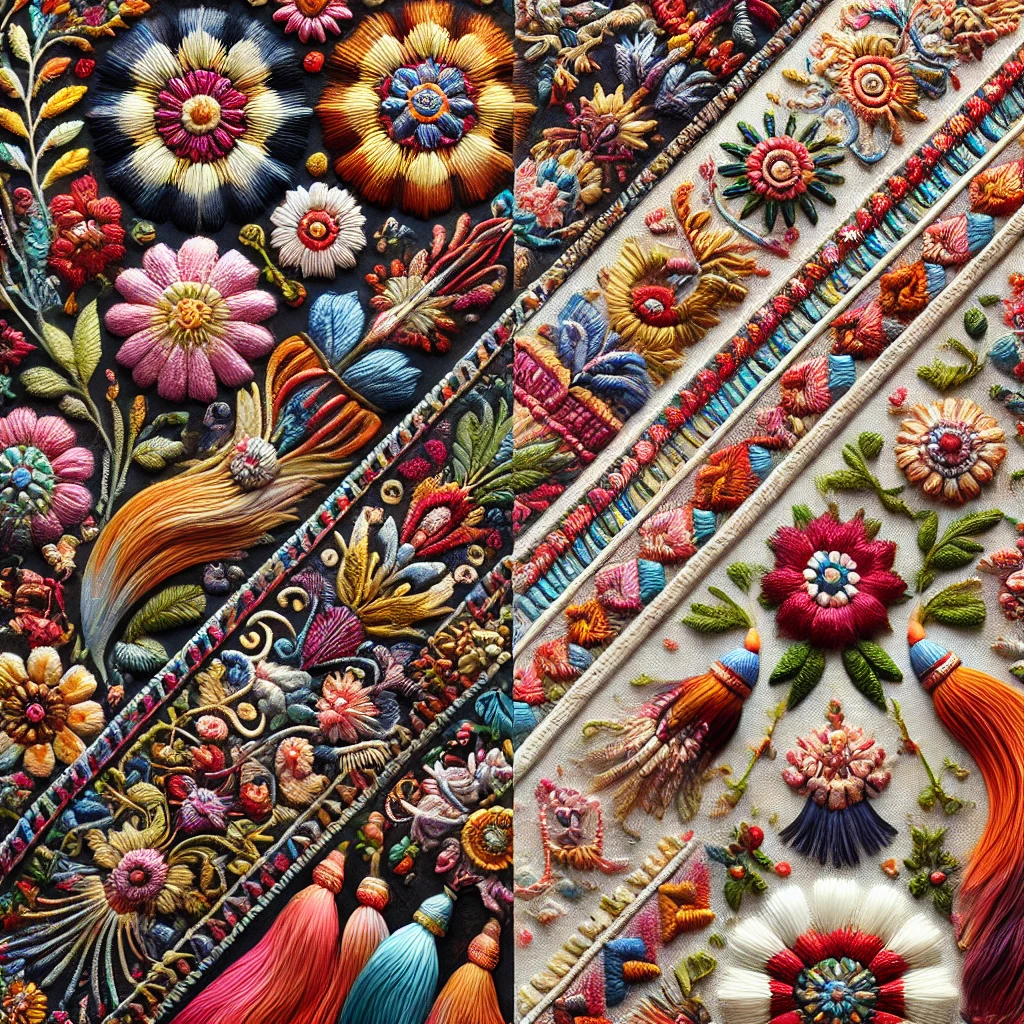
On the other hand, embroidery stitches, such as satin or French knots, emphasize decoration and artistry, adding texture and visual interest to your projects. You’ll notice that embroidery stitches often involve more intricate techniques, requiring a variety of thread types and colors.
Benefits of Basic Stitches
Basic stitches offer numerous advantages that make them indispensable for any sewing project, guaranteeing your fabric pieces are securely joined and built to last. They’re easy to learn, making them perfect for beginners. Plus, they provide a solid foundation for more complex techniques. You’ll find that basic stitches are versatile, suitable for various fabrics and projects, from hems to seams.
| Benefit | Description | Example |
|---|---|---|
| Simplicity | Easy to master for beginners | Straight stitch |
| Versatility | Works with different fabric types | Zigzag stitch |
| Durability | Guarantees strong, lasting seams | Backstitch |
Advantages of Embroidery Stitches
Embroidery stitches bring a unique flair to your projects, allowing you to enhance both aesthetics and texture with ease. One major advantage is their versatility; you can create intricate designs that reflect your personal style. These stitches offer depth, making your work visually striking and engaging.
Moreover, embroidery stitches are durable, ensuring your designs withstand the test of time without fraying or losing their appeal. You’ll also find that using different thread types can yield various finishes, further expanding your creative options.
Additionally, mastering embroidery stitches can elevate your skill set, opening doors to more advanced techniques. Overall, these stitches not only beautify your work but also provide a sense of accomplishment and pride in your craftsmanship.
Common Uses for Each Technique
You’ll often find embroidery stitches used in decorative projects, such as embellishing clothing, home décor, and crafts, where intricate designs are desired. These techniques add texture and visual interest, making items stand out. Think of using them on table runners, wall hangings, or personalized gifts.
On the other hand, basic stitches serve practical purposes. You’ll use them for constructing seams, hems, or mending items. Basic stitches provide a sturdy foundation, ensuring your projects hold together well.
Both techniques have their place in sewing, but they cater to different needs. By recognizing their common uses, you can choose the right approach for your next project, whether it’s adding flair or achieving durability.
Tips for Combining Stitches
Combining various stitches can elevate your projects, adding both flair and functionality. When you mix different techniques, you create visual interest and texture that can transform your work.
Here are some tips to help you combine stitches effectively:
-
Plan Your Design: Sketch your project to visualize how different stitches will interact.
-
Choose Complementary Colors: Select thread colors that harmonize to enhance the overall look.
-
Vary Stitch Lengths: Play with different stitch lengths to create depth and dimension in your design.
-
Practice on Scrap Fabric: Before committing to your main piece, experiment with combinations on scrap fabric to refine your technique.
Choosing the Right Technique
When you’re choosing the right technique, consider the purpose of each stitch and your skill level.
It’s also important to think about what project you’re working on and how different stitches can impact the final look.
Making informed choices will help you achieve the best results in your embroidery.
Purpose of Each Technique
Choosing the right technique depends on the desired effect and the fabric you’re working with. Each stitch serves a unique purpose, and understanding these can elevate your project. Here are some considerations to keep in mind:
-
Detail: Use embroidery stitches for intricate designs and embellishments.
-
Durability: Basic stitches are ideal for seams and structural integrity.
-
Texture: Choose embroidery stitches to add depth and dimension to your fabric.
-
Speed: Basic stitches are quicker to execute, perfect for time-sensitive projects.
Skill Level Considerations
Skill level often determines whether you opt for embroidery stitches or basic stitches in your projects.
If you’re a beginner, starting with basic stitches is a smart choice. They’re simpler to learn and can help you build confidence. As you gain experience, you can gradually explore embroidery stitches, which often involve more intricate techniques and detail.
If you’re already comfortable with sewing, diving into embroidery can enhance your skills and allow for more creative expression.
Remember, choosing the right technique should align with your current abilities. There’s no rush; take your time to master the basics before tackling more complex stitches.
Ultimately, selecting a technique that suits your skill level will make your projects more enjoyable and successful.
Project Suitability Factors
Understanding the project’s requirements helps you determine whether to use embroidery stitches or basic stitches for the best results. Here are some factors to evaluate:
-
Fabric Type: Some fabrics work better with specific stitches. Lightweight fabrics may fray with heavier embroidery stitches.
-
Design Complexity: If your design is intricate, embroidery stitches can enhance detail, while basic stitches suit simpler designs.
-
Durability Needs: For items facing wear and tear, basic stitches may offer more strength, whereas embroidery stitches add decorative flair.
-
Time Constraints: Basic stitches generally take less time, so if you’re on a tight schedule, they might be the way to go.
Conclusion
In the world of fabric and thread, knowing when to wield a basic stitch or indulge in an embroidery flourish can elevate your creations to new heights.
Like the brush strokes of a master painter, each technique serves its purpose, crafting a tapestry of durability and beauty.
Embrace the art of combining stitches, and watch your projects transform, echoing the timeless elegance of a Van Gogh masterpiece.
Choose wisely, and let your creativity flourish in vibrant harmony.
Frequently Asked Questions
Can I Use Embroidery Stitches on Knitted Fabrics?
Yes, you can definitely use embroidery stitches on knitted fabrics! Just make sure to choose the right needle and thread to prevent damage. It’ll add a beautiful touch and enhance your knitted creations. Enjoy experimenting!
What Tools Are Essential for Basic Stitching?
Just like a painter needs brushes, you’ll need a few essential tools for basic stitching: a needle, thread, scissors, and fabric. With these, you can create beautiful designs that bring your ideas to life.
How Do I Fix Mistakes in Embroidery?
To fix mistakes in embroidery, you can carefully unpick the stitches using a seam ripper or scissors. Once removed, re-stitch the section, ensuring you follow your design accurately to achieve a flawless finish.
Are There Eco-Friendly Threads for Stitching?
They say, “Reduce, reuse, recycle!” When it comes to stitching, you can definitely find eco-friendly threads made from organic cotton, bamboo, or recycled materials. These options help you create beautiful work while caring for the planet.
Can Children Learn Embroidery Techniques Easily?
Children can easily learn embroidery techniques. With simple projects, colorful threads, and guided instructions, they’ll develop skills and confidence while enjoying a creative outlet. It’s a fun way to spark their imagination.