
While embroidery offers a sleek, polished look, hand stitching brings an artisanal charm that can’t be replicated. You might find yourself torn between the precision of machine-made designs and the warmth of handcrafted details, each method carrying its own set of benefits and limitations. As you consider which approach aligns best with your vision, you’ll want to weigh factors like durability, cost, and the overall aesthetic impact. What might surprise you, however, is how these choices can shape not just the final product, but also the experience of personalization itself.
Overview of Personalization Techniques
When it comes to custom designs, understanding the various personalization techniques can help you choose the best option for your project. You’ll encounter several methods, each with unique benefits.
For instance, digital printing allows for vibrant, detailed images, making it perfect for complex designs. On the other hand, heat transfer vinyl offers durability and flexibility, enabling you to create eye-catching graphics quickly.
You might also consider screen printing, which is ideal for bold designs in bulk production. If you’re looking for something that stands out, appliqué adds texture and dimension to your pieces.
Ultimately, evaluating your design’s purpose and the desired aesthetic will guide you in selecting the right personalization technique that fits your vision perfectly.
What Is Embroidery?
Embroidery is a decorative technique that involves stitching patterns or designs onto fabric using thread, creating a distinctive and textured appearance.
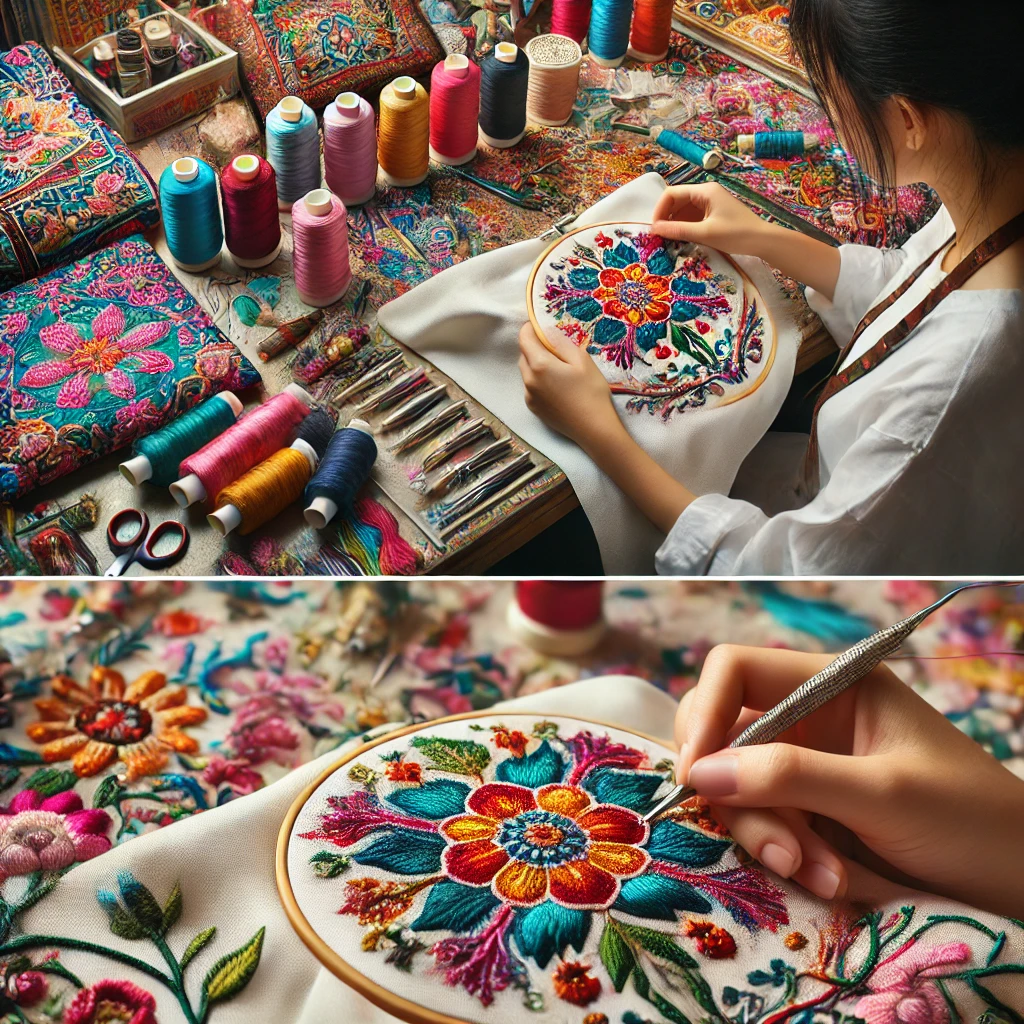
You can use various stitches, colors, and materials to attain the look you want, whether it’s for clothing, home decor, or accessories. This method allows for a high level of detail and customization, making it popular for personalizing items.
With embroidery machines, you can quickly produce intricate designs, or you can hand-stitch for a more personal touch.
The durability of embroidered designs also guarantees they stand up to wear and washing, making them ideal for items you want to use regularly.
Understanding Hand Stitching
When you explore hand stitching, you’ll discover various techniques and tools that can elevate your custom designs.
Understanding these methods not only enhances your skills but also reveals the unique benefits hand stitching offers.
Let’s break down what makes hand stitching a valuable option for your projects.
Techniques and Tools
Mastering hand stitching techniques requires a blend of skill and the right tools to bring your custom designs to life. To get started, you’ll need a few essentials that will make the process smoother and more enjoyable.
-
Needles: Choose the right needle for your fabric type; a sharp needle works best for lightweight materials, while a larger needle is better for thicker fabrics.
-
Thread: Use high-quality thread to guarantee durability and a clean finish. Cotton or polyester threads are great choices depending on your project.
-
Fabric Scissors: Invest in a good pair of fabric scissors to achieve clean cuts, which is crucial for precise stitching.
With these tools in hand, you’ll be well-equipped to create stunning hand-stitched designs.
Benefits of Hand Stitching
Understanding the benefits of hand stitching can enhance your custom designs, offering a personal touch that machine methods often lack. When you choose hand stitching, you gain complete control over every detail, allowing for unique patterns and textures that truly reflect your vision. Each stitch becomes a demonstration of your craftsmanship, showcasing your dedication and attention to detail.
Hand stitching also allows for greater flexibility; you can easily adjust designs on-the-fly, ensuring that your final product meets your exact specifications. Additionally, it often results in higher durability, as hand-stitched pieces tend to withstand wear and tear better than their machine-stitched counterparts.
Ultimately, hand stitching transforms your creations into one-of-a-kind pieces that tell a story, making them more meaningful and cherished.
Comparing Durability and Longevity
When choosing between embroidery and hand stitching, you’ll want to contemplate how each method holds up over time.
Material resilience plays a big role in durability, and the right maintenance can extend the life of your custom designs.
Let’s explore how these factors influence your decision for long-lasting results.
Material Resilience Factors
Durability and longevity play essential roles in determining the effectiveness of embroidery and hand stitching for custom designs. When you’re choosing between the two techniques, consider these material resilience factors that can impact your final product:
-
Fabric Choice: Thicker, tightly woven fabrics often withstand wear and tear better than lighter materials, enhancing the durability of your design.
-
Thread Quality: High-quality threads resist fraying and fading, ensuring your custom design remains vibrant and intact over time.
-
Technique Strength: Hand stitching can sometimes offer more flexibility and strength on delicate fabrics, while machine embroidery may provide a more uniform finish on sturdier materials.
Maintenance and Care Tips
To keep your custom designs looking their best, it’s important to follow proper maintenance and care practices that cater to the unique needs of embroidery and hand stitching.
Embroidered items tend to be more durable, but they can still fray if not washed properly. Always wash them in cold water and avoid harsh detergents.
On the other hand, hand-stitched designs may require gentler handling. Hand wash these items to preserve the threads and prevent unraveling.
For both types, air drying is preferable to maintain their shape and colors.
Regularly check for loose threads and secure them promptly to prolong the design’s life.
With these tips, you’ll guarantee your personalized pieces remain vibrant and intact for years to come.
Aesthetic Differences Explored
Embroidery and hand stitching each bring a unique aesthetic that can dramatically influence the overall look of custom designs.
When you choose between the two, consider these key differences:
-
Texture: Hand stitching often offers a more textured, organic feel, while embroidery tends to have a smooth, polished finish.
-
Detailing: Embroidery allows for intricate patterns and fine details that can catch the eye, while hand stitching can create a charming, rustic appearance.
-
Color Variation: Embroidery typically provides vibrant colors that stand out, whereas hand stitching can blend colors more subtly, giving a softer, understated look.
Ultimately, your choice will depend on the style you want to achieve and the message you want your custom design to convey.
Cost Considerations
When deciding between embroidery and hand stitching for your custom designs, it’s essential to contemplate how each method impacts your budget.
Embroidery typically requires an initial investment in specialized machines and software, making it more cost-effective for larger orders. If you’re creating just a few pieces, however, hand stitching might be the more economical choice, as it doesn’t necessitate expensive equipment.
Consider the cost of labor too; hand stitching can be time-consuming, potentially increasing your overall expenses.
Additionally, think about the materials used—high-quality threads and fabrics can elevate costs regardless of the method.
Ultimately, weighing these factors will help you choose the best option that fits your financial constraints while still delivering the design you envision.
Choosing the Right Method
Selecting the right method for your custom designs depends on factors like the complexity of your artwork, the desired finish, and the intended use of the final product. Here are three key considerations to help you decide:
-
Complexity of Design: If your artwork features intricate details or multiple colors, embroidery might be the better choice. It efficiently handles complex designs with precision.
-
Desired Finish: Hand stitching offers a unique, artisanal look, perfect for projects where a personal touch matters. If you want something more polished, embroidery provides a consistent finish.
-
Intended Use: Consider how the final product will be used. For items exposed to wear and tear, embroidery is durable, while hand stitching may be better suited for decorative pieces.
-
Conclusion
In the end, whether you lean toward the polished precision of embroidery or the heartfelt artistry of hand stitching, each method offers its own charm.
Embroidery shines with its durability and vibrant designs, perfect for everyday use, while hand stitching adds a personal, handcrafted touch to unique pieces.
Weigh your needs, preferences, and budget, and you’ll discover the ideal personalization technique that speaks to your style and purpose, ensuring your custom design truly reflects you.
Frequently Asked Questions
Can Both Methods Be Used on All Fabric Types?
Yes, both methods can be used on various fabric types, but you’ll need to take into account the fabric’s weight and texture. Some materials work better with embroidery, while others may suit hand stitching more effectively.
How Long Does Each Technique Typically Take?
Embroidery usually takes a few hours, depending on complexity, while hand stitching can take considerably longer, often several hours or even days. It really depends on the design’s intricacy and the fabric used.
Are There Limitations on Design Complexity for Each Method?
While intricate designs can shine in hand stitching, they require more time and skill. On the other hand, embroidery handles complex patterns with ease but may limit finer details. You’ll need to weigh these factors for your project.
Can I Combine Embroidery and Hand Stitching in One Project?
Yes, you can definitely combine embroidery and hand stitching in one project. Mixing techniques allows for unique textures and intricate designs, enhancing your creativity. Just guarantee your materials and threads complement each other for a cohesive look.
What Tools Are Needed for Hand Stitching Versus Embroidery?
In the garden of creativity, you’ll need a sturdy needle and colorful threads for hand stitching, while embroidery calls for a hoop, specialized needles, and vibrant floss. Each tool brings your artistic vision to life