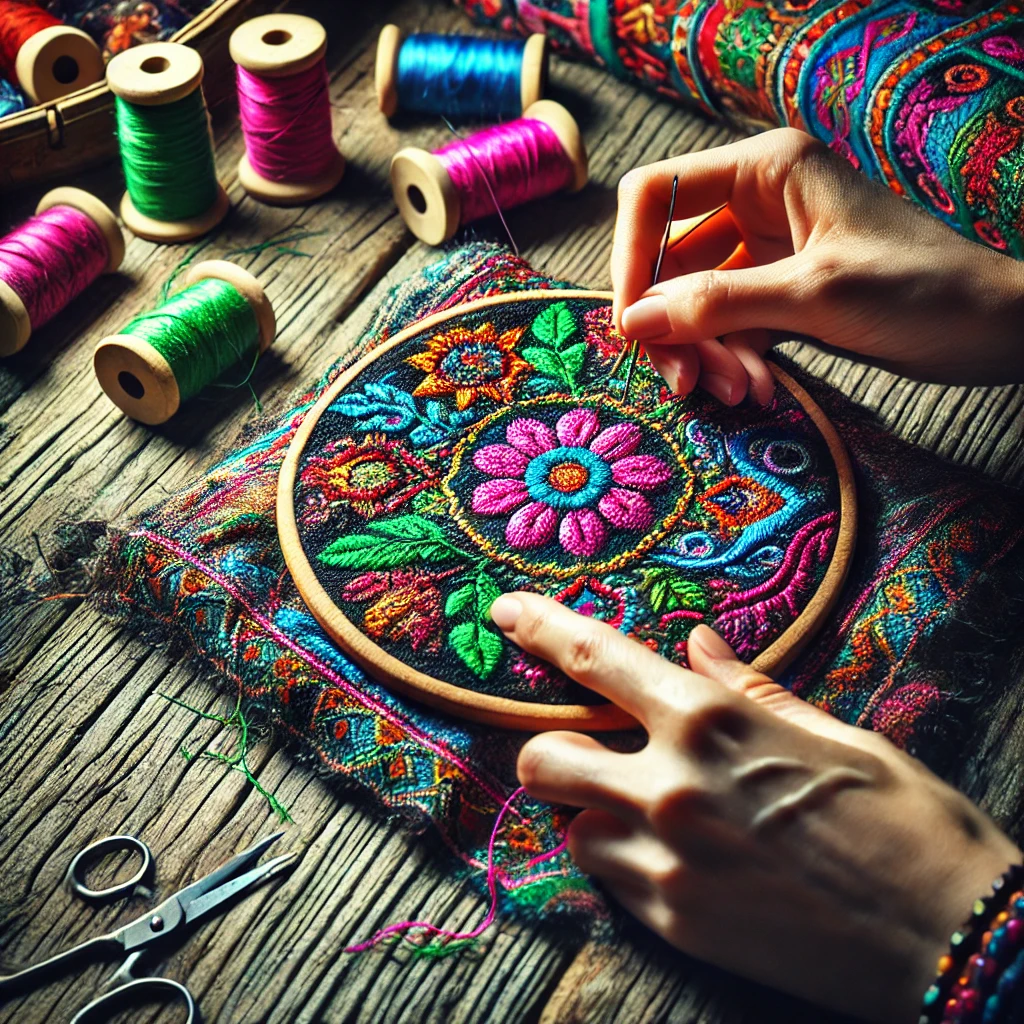
Imagine the vibrant threads weaving through a patch, creating a tapestry of color over a worn fabric. You might find yourself at a crossroads, deciding between the practical simplicity of stitching to quickly mend a tear or the artistic allure of embroidery, which can transform a flaw into a statement piece. Each method offers distinct advantages, yet the choice you make can change not just the garment’s functionality but also its character. What factors should guide your decision when considering the balance between repair and personal expression?
Benefits of Embroidery
Embroidery adds a personal touch to your clothes while also reinforcing the fabric for lasting repairs.
When you choose embroidery, you’re not just fixing a tear; you’re transforming your garment into a unique piece of art. This technique allows you to express your creativity, showcasing designs that reflect your personality.
Plus, embroidery can cover up imperfections with style, making your clothes look intentional rather than merely patched. It’s a great way to extend the life of your favorite items, ensuring they stay in your wardrobe longer.
Advantages of Stitching
Stitching offers a straightforward and efficient way to repair clothing, providing durability and strength to seams and fabric.
When you choose stitching, you benefit from several key advantages:
-
Speed: You can quickly mend tears or holes, saving time compared to more intricate methods.
-
Cost-Effective: Stitching requires minimal tools and materials, making it budget-friendly for most repairs.
-
Versatility: You can use stitching techniques on various fabrics, from denim to delicate silk, ensuring you can tackle any garment.
-
Strong Bonds: Proper stitching creates a secure hold that withstands wear and tear, keeping your clothes functional for longer.
Comparing Aesthetic Appeal
When you think about aesthetic appeal in clothing repair, the visual impact of your chosen technique stands out.
You’ll notice how color and design choices can either enhance or detract from the overall look, while texture and fabric harmony play essential roles in achieving a polished finish.
Let’s explore how embroidery and stitching techniques compare in these areas.
Visual Impact of Techniques
Choosing between embroidery and stitching can dramatically change the visual appeal of your repaired garments. Each technique has its unique charm that can enhance or detract from your clothing’s style. Here are some factors to evaluate:
-
Texture: Embroidery adds depth with its raised designs, while stitching offers a flat, clean look.
-
Color Variety: Embroidery allows for vibrant multi-colored patterns, whereas stitching generally sticks to a single color.
-
Intricacy: Embroidery can showcase fine details and elaborate designs, while stitching tends to be more straightforward and practical.
-
Durability: Stitching often provides a stronger hold, while embroidery may fray over time but adds visual intrigue.
Ultimately, your choice will depend on the look and feel you want to achieve for your clothing.
Color and Design Choices
Color and design choices play an essential role in enhancing the aesthetic appeal of your repaired garments, making them stand out or blend seamlessly with your style.
When considering embroidery, vibrant colors and intricate patterns can transform a simple repair into a statement piece, allowing your creativity to shine.
On the other hand, stitching techniques often favor more subtle hues and classic designs, providing a clean, polished look that complements various outfits.
Think about your wardrobe: do you want to make a bold statement or maintain a refined appearance?
Texture and Fabric Harmony
Balancing texture and fabric harmony is essential for ensuring that your repairs not only look good but also feel cohesive with the original garment.
When you’re choosing between embroidery and stitching techniques, consider the following factors:
-
Fabric Type: Match the patch material to the original fabric to maintain consistency.
-
Thread Texture: Use threads that complement the fabric’s texture, whether it’s smooth, rough, or fuzzy.
-
Repair Technique: Choose stitching or embroidery that aligns with the garment’s overall style; delicate for lightweight fabrics and sturdy for heavier materials.
-
Color Contrast: Maintain harmony not just in color but also in the visual weight of the repair.
Durability and Longevity
When it comes to durability, you’ll want to contemplate the strength of stitching versus the wear resistance of embroidery.
Stitching typically offers more robust support for seams, while embroidery can enhance the fabric’s longevity through decorative reinforcement.
Understanding these differences can help you choose the best repair method for your clothes.
Stitching Strength Comparison
Stitching techniques vary considerably in strength, affecting the durability and longevity of your repaired clothes.
When choosing a technique, consider these key factors:
-
Thread Type: Stronger threads like polyester or nylon provide better support.
-
Stitch Density: A higher density results in a more robust repair that can withstand wear.
-
Stitch Type: Techniques like zigzag or double stitching offer enhanced durability compared to straight stitches.
-
Tension Control: Proper tension during stitching prevents fraying and guarantees a secure hold.
Embroidery Wear Resistance
While stitching techniques focus on structural integrity, embroidery offers a unique blend of aesthetics and wear resistance that can enhance the longevity of your clothing repairs.
When you choose embroidery, you’re not just adding a decorative element; you’re also reinforcing the fabric. High-quality thread and intricate designs can create a barrier against wear and tear, making those patched areas more durable.
Unlike basic stitching, embroidery can distribute stress across a wider surface area, reducing the risk of fraying. Plus, it often withstands washing and daily use better than traditional patches.
Cost Considerations
Cost plays an essential role in deciding between embroidery and stitching techniques for clothing repairs. When weighing your options, consider the following factors:
-
Material Costs: Embroidery often requires specialized threads and stabilizers, which can add up.
-
Labor Time: Stitching may take less time, resulting in lower labor costs if you hire someone.
-
Skill Level: If you’re skilled at embroidery, you might save money by doing it yourself; otherwise, you’ll need to factor in professional fees.
-
Durability: Embroidery can provide a more durable finish, potentially saving you money in the long run by prolonging the life of the garment.
Evaluating these costs will help you make an informed decision on the best repair technique for your clothing.
Choosing the Right Method
When deciding between embroidery and stitching for your clothing repairs, it’s important to weigh the specific needs of the garment and the type of damage.
If you’re dealing with a tear or hole, simple stitching might be your best bet for a quick fix. It’s efficient and often less time-consuming.
On the other hand, if you want to add a decorative touch while repairing, embroidery could be the way to go. It not only conceals the damage but also enhances the garment’s style.
Consider the fabric too; delicate materials may require embroidery for a softer finish, while sturdier fabrics can handle heavy stitching.
Ultimately, choose the method that aligns with your repair goals and the garment’s character.
Conclusion
In the tapestry of clothing repair, both embroidery and stitching weave their own magic.
If you’re after a quick fix, stitching serves as your trusty needle, mending with precision.
But if you crave a splash of creativity, embroidery blossoms like wildflowers, turning flaws into fabulous art.
Ultimately, your choice should reflect your personal style—whether you patch with purpose or paint with flair, your garments will tell a story that’s uniquely yours.
Frequently Asked Questions
Can I Combine Embroidery and Stitching Techniques for Repairs?
Yes, you can definitely combine embroidery and stitching techniques for repairs. Using both methods enhances durability and aesthetics, making your repairs not only functional but also visually appealing. Experiment and find what works best for your project!
How Do I Choose Thread Types for Each Method?
Think of thread as the lifeline of your project. For embroidery, choose cotton for softness and sheen. For stitching, opt for polyester for strength and durability. Each thread type enhances your repair’s overall beauty and resilience.
What Tools Are Essential for Embroidery and Stitching?
For embroidery and stitching, you’ll need essential tools like needles, thread, scissors, and fabric. A hoop can help keep your fabric taut, while a thimble protects your fingers during stitching. Don’t forget a measuring tape!
Are There Specific Fabrics Better Suited for Each Technique?
Yes, certain fabrics work better for each technique. For embroidery, lightweight cottons or linens are ideal, while thicker fabrics like denim or canvas suit stitching. Choosing the right fabric enhances durability and appearance in your projects.
Can I Repair Delicate Fabrics With These Methods Safely?
Yes, you can repair delicate fabrics safely with both methods, but be cautious. Use lighter threads and smaller stitches to avoid damaging the fabric. Always test on a hidden area first to guarantee compatibility